
Data Enrichment
From raw bank text to something people recognise.
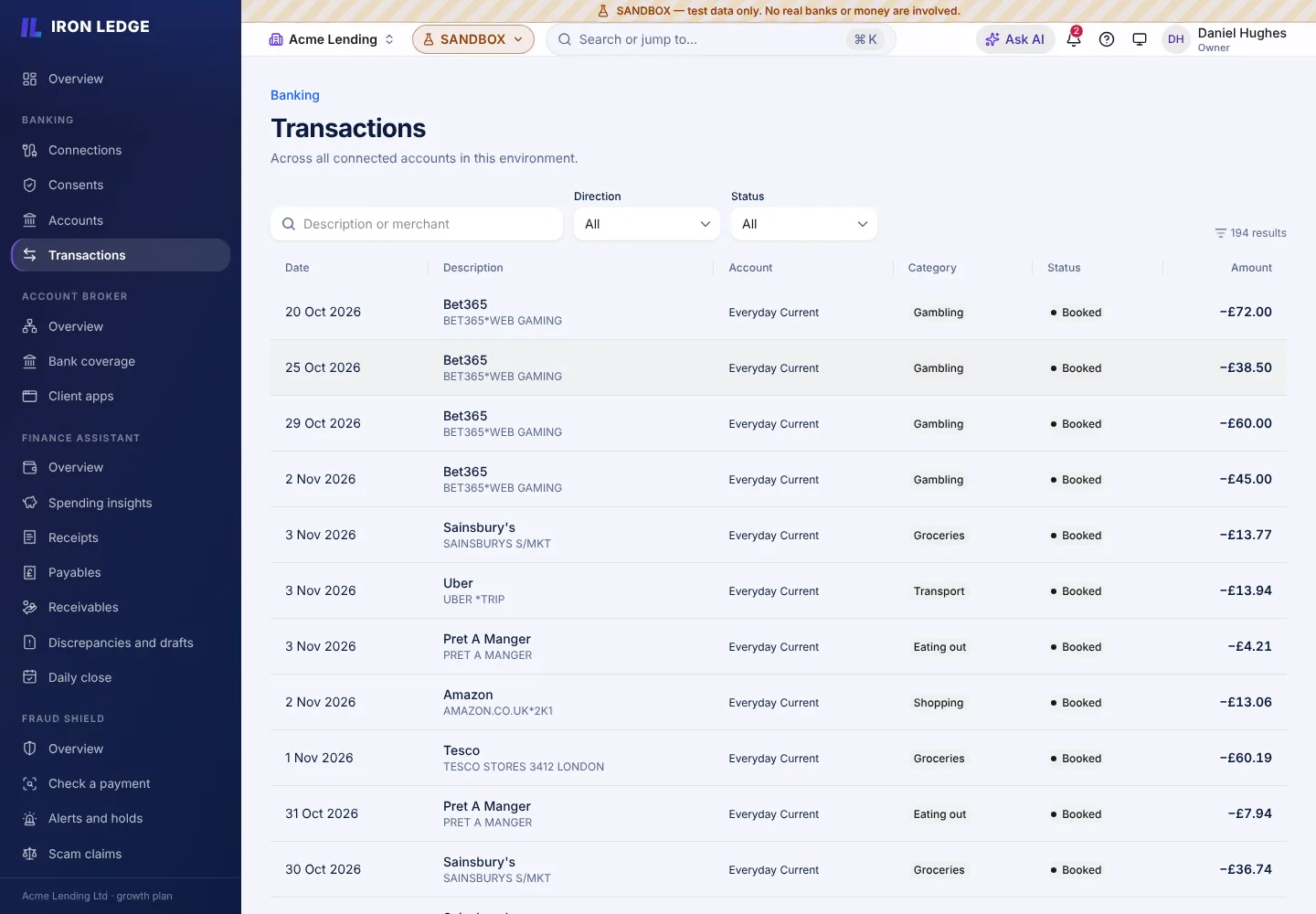
Transactions arrive with merchant names, categories and a note on where each label came from, so teams can trust, audit and correct the data they build on.
What it does
Capabilities
Each item says whether it is shown in the prototype console today or is planned. Planned items are not available.
Categories
Shown in prototypeEach transaction carries a spending category such as groceries, transport or eating out.
Enrichment source
Shown in prototypeThe transaction drawer shows whether a label came from the bank, a rule or a model, with confidence.
Receipts and matching
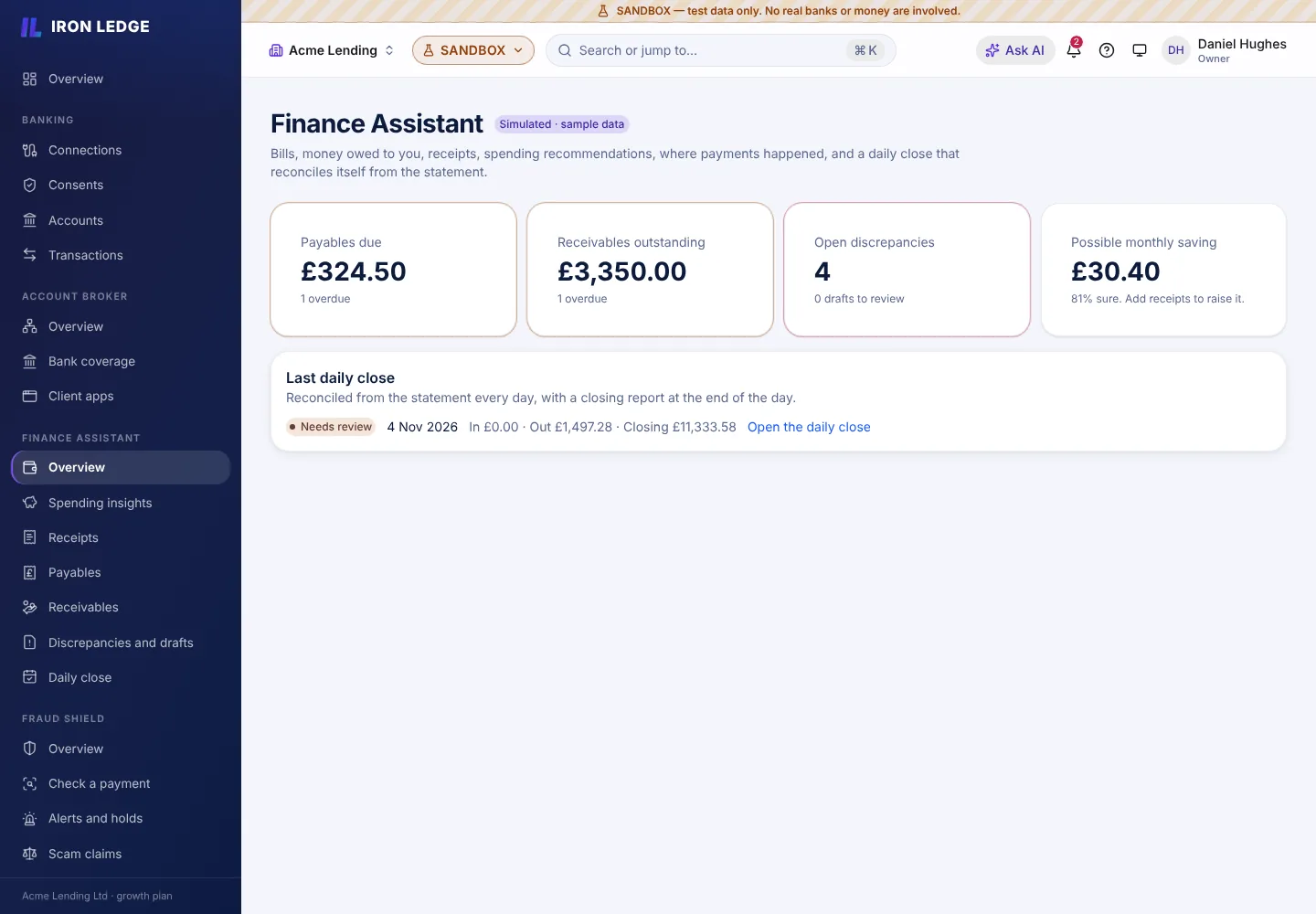
Shown in prototypeMatch receipts and bills to the transactions they explain.
Discrepancy review
Shown in prototypeItems that do not line up are queued for a person to resolve.
How it works
Four steps
- 01
Receive transactions
Consented bank transactions arrive in the console.
- 02
Enrich
Merchant and category are added and sourced.
- 03
Review
Correct low-confidence labels.
- 04
Use
Feed budgets, books and reports from the same clean data.
In the console
Real screens from the prototype
Captured from the running prototype with simulated data.
For developers
Request shape
An illustration of the kind of data involved. API reference and SDKs are not yet published, so no endpoints are listed.
Illustrative enriched transaction
{
  "amount": "-42.50",
  "currency": "GBP",
  "merchant": "Example Grocer",
  "category": "Groceries",
  "enrichedBy": "rules",
  "note": "Illustrative only - not a published endpoint"
}
UK context
Regulatory background
Enriched data is derived from consented account information, so UK GDPR purpose limitation and data minimisation apply to how it is used.
General background, not legal advice. No authorisation or certification is claimed on this page.
Related